

Studying With The Spiritual Master
Srila Bhaktivedanta Swami Prabhupada my Spiritual master, makes a very clear and authoritative statement regarding the position of the Upanisads within the Vedic literature. In the Introduction to Sri Isopanisad, Srila Prabhupada writes: “The Vedic literature consists of the four Vedas, the Upanisads, the Puranas, the Vedanta sutra, and the Mahabharata. The Upanisads mark the beginning of transcendental life.” This sentence is precise and leaves no room for reinterpretation. It establishes that transcendental life does not begin with ritual, morality, social duty, or philosophical speculation, but with the Upanisads. Srila Prabhupada places them at the point where genuine spiritual inquiry actually starts.
The Upanisads appear at the end of the Vedas and are therefore known as Vedanta, meaning the conclusion of Vedic study. However, conclusion here does not mean completion in the sense of final realization. It means the conclusion of materialistic thinking.
The Upanisads dismantle bodily identification, ritualism performed for material gain, and the idea that prosperity, pleasure, or even piety can satisfy the soul. They introduce the eternal conscious self distinct from the body and direct attention toward Brahman, the Absolute Truth, as the ultimate object of inquiry. This is why Srila Prabhupada describes them as the beginning of transcendental life and not the end.
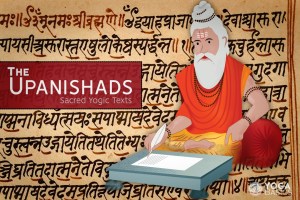
Srila Vedavyasa The Compiler Of The Vedas
The language of the Upanisads is deliberately condensed. They speak through aphorisms, paradox, negation, and symbolic imagery. This makes them powerful but also easily misunderstood. Without proper guidance they can be misread as promoting impersonalism or the dissolution of individuality. Srila Prabhupada repeatedly warns that the Upanisads must be understood through the disciplic succession and in light of Bhagavad gita and Srimad Bhagavatam. These later scriptures do not contradict the Upanisads. They clarify them, expand them, and bring their conclusions into full light.
Traditionally ten Upanisads are accepted as principal. These are Isa, Kena, Katha, Prasna, Mundaka, Mandukya, Taittiriya, Aitareya, Chandogya, and Brhad Aranyaka. These texts are cited repeatedly across all Vedanta schools and form the philosophical foundation upon which later interpretations are built. Srila Prabhupada places particular emphasis on Isa Upanisad because it establishes the principle of isavasyam, that everything within the universe is owned and controlled by the Supreme Lord and must therefore be used in His service. This single principle resolves the false opposition between enjoyment and renunciation and establishes devotional service as the proper function of the soul.
There has always been a strong Vaisnava tradition of interpreting the Upanisads in a personalist way. Sri Ramanuja established that Brahman possesses qualities and that the individual soul is eternally dependent on the Supreme Person. Sri Madhvacarya went further and firmly established eternal distinction between God, the soul, and matter, rejecting the idea that individuality is a temporary illusion. These conclusions form the essential framework for later Vaisnava thought.
Within the Gaudiya Vaisnava line, Sri Jiva Gosvami plays a decisive role. In his Sat Sandarbhas he repeatedly cites the Upanisads to establish that the Absolute Truth is personal, endowed with energies, and fully realized through devotional service. Sri Baladeva Vidyabhusana, in his Govinda Bhasya on Vedanta sutra, harmonizes all Upanisadic statements with devotion to Krsna and defends the Gaudiya position against impersonalist interpretations. Srila Prabhupada stands firmly in this disciplic succession and consistently presents the Upanisads as preparatory knowledge meant to lead to bhakti.
Certain Upanisads are especially central to Gaudiya theology. Isa Upanisad establishes divine proprietorship. Katha Upanisad clearly distinguishes the body, the soul, and the Supersoul and emphasizes that realization comes by divine grace, not intellectual effort alone. Mundaka Upanisad presents the image of two birds on one tree, which Gaudiya Vaisnavas understand as the jiva and Paramatma, eternally distinct yet intimately related. Chandogya Upanisad contains statements such as tat tvam asi, which Gaudiyas understand as indicating qualitative similarity between the soul and Brahman, not absolute identity. Brhad Aranyaka Upanisad deeply examines immortality, fearlessness, and conscious existence beyond matter.
The major divergence between Mayavada and Gaudiya Vaisnava interpretations does not lie in the verses themselves but in how they are read. Mayavada concludes that Brahman is ultimately without form, qualities, or personality and that individuality is temporary and ultimately false. Gaudiya Vaisnavas understand Brahman as the all pervading spiritual effulgence of the Supreme Person and individuality as eternal. Where Mayavada sees the dissolution of the self, Gaudiya Vaisnavas see the perfection of relationship through service.
What the Upanisads present in compressed and indirect language is spoken directly by the Supreme Personality of Godhead in Bhagavad gita. What is philosophical and abstract in the Upanisads becomes personal, relational, and fully developed in Srimad Bhagavatam. The questions raised in the Upanisads about identity, consciousness, and liberation find their complete answers in loving devotional service.
From the Gaudiya Vaisnava perspective, the Upanisads are therefore not impersonal texts leading toward void or self annihilation. They are the first awakening of transcendental consciousness. They mark the beginning of transcendental life exactly as Srila Prabhupada states. When understood through disciplic succession, they naturally and inevitably lead to bhakti to Krsna, which Srila Prabhupada presents as the mature fruit of all Vedic understanding
Devarsiratha dasa
Vanaprastha
Srila Bhaktivedanta Swami Prabhupada 1973
Home
https://harekrishnasociety.com
Also visit
http://www.purebhakti.com
Subscribe
Join me at X
https://x.com/devarsirat
Ps..AI helped with the linguistic assistance in finalizing this text. It did not create the philosophical content or determine the conclusions. All credit for its substance belongs to our Acāryas and their divine teachings.
 Posted in

