
The Disciplic Succession And The Solar Dynasty
Two Parallel Timelines From Sri Krishna
Introduction
When studying Krishna consciousness, sincere readers often notice two related but different transmissions. One is the Brahma Madhva Gaudiya Vaishnava disciplic succession of spiritual masters.
The other is the royal lineage descending from the sun god Vivasvan, through which Bhagavad gita was applied in society by righteous kings. These are not competing lines. They are two parallel timelines, serving different purposes, both originating in Sri Krishna.
Vedavyasa The Compiler Of The Vedas
This page explains both timelines together, their age, their function, and how they harmonize.
Timeline One Is the one we are presently connected to.
It is called The The Brahma Madhva Gaudiya Vaishnava Parampara or Disciplic succession.
The Acarya Line. Its Purpose is …
To preserve, protect, and transmit siddhanta and pure bhakti through realized spiritual teachers, so conditioned souls in all ages may understand Krishna correctly and develop loving service to Him.
Approximate age of this timeline
This disciplic succession begins at the very start of the universe.
According to Vedic cosmology, the current universe is approximately
155 trillion years old.

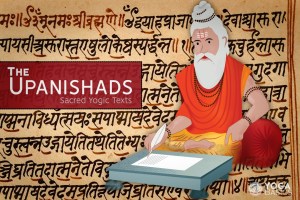
Studying The Upanishads With The Spiritual Master
Lord Brahma appears at the beginning of creation and receives divine knowledge directly from Sri Krishna. From Brahma onward, this parampara continues uninterrupted through successive ages, yugas, and civilizations, down to the present day.
Important clarification about this list
Only the most prominent and widely recognized spiritual masters are mentioned here.
There are many spiritual masters between these names, often spanning generations. The parampara is continuous, not intermittent. Lists such as this highlight key guardians of siddhanta, not every single initiating guru.
The disciplic succession is living, flowing, and far more extensive than any short list can show.
The main acaryas in this line are traditionally presented as follows.
Sri Krishna. (beyond material time, appearance approx 3102 BCE)
Brahma. (beginning of the universe, approx 155 trillion years ago)
Narada. (early universal history, pre human epochs)
Vedavyasa. (end of Dvapara yuga, approx 3102 BCE)
Sri Madhvacharya. (1238 to 1317 CE)
From Madhvacharya onward, the line continues through many Madhva acaryas, of whom only the most influential are usually named.
Lakshmipati Tirtha. (approx late 14th to early 15th century CE)
Madhavendra Puri. (approx 15th century CE)
Isvara Puri. (approx late 15th century CE)
Sri Caitanya Mahaprabhu. (1486 to 1534 CE)
From Sri Caitanya Mahaprabhu, the Gaudiya Vaishnava current expands widely.
Rupa Goswami. (1489 to 1564 CE)
Raghunatha Dasa Goswami. (1495 to 1586 CE)
Krishnadasa Kaviraja Goswami. (approx 16th century CE)
Narottama Dasa Thakura. (1534 to 1611 CE)
Vishvanatha Chakravarti Thakura. (approx late 17th to early 18th century CE)
Baladeva Vidyabhushana. (approx early 18th century CE)
Jagannatha Dasa Babaji. (approx 1776 to 1894 CE)
Bhaktivinoda Thakura. (1838 to 1914 CE)
Gaurakishora Dasa Babaji. (1838 to 1915 CE)
Bhaktisiddhanta Sarasvati Thakura. (1874 to 1937 CE)
Bhaktivedanta Swami Prabhupada. (1896 to 1977 CE)
Bhaktivedanta Narayana Maharaja. (1921 to 2010 CE)
How to understand this timeline
This is not merely a historical chain of names. It is a living current of service, realization, and fidelity to Sri Krishna as a person. The continuity lies in surrendered service and correct understanding, not in institutional labels or administrative succession.
Timeline Two
The Solar Dynasty
Surya Vamsa
The Royal Line
Purpose
To apply Krishna’s teachings through righteous governance, social order, and personal example, so human society may be guided by dharma.
Approximate age of this timeline
The transmission to Vivasvan occurs very early in cosmic history, long before recorded human history on earth.
From Vivasvan onward, the solar dynasty unfolds over many manvantaras and yuga cycles. The appearance of Sri Ramacandra takes place in Treta yuga, millions of years before the present Kali yuga.
This places the solar dynasty timeline also in the range of millions to billions of years, operating within the same vast cosmic framework as the guru parampara.
How the royal line begins
Sri Krishna spoke Bhagavad gita to Vivasvan. (early cosmic history)
Vivasvan instructed Vaivasvata Manu. (current manvantara, approx 120 million years ago)
Vaivasvata Manu instructed Iksvaku. (early Treta yuga)
From Iksvaku, the solar dynasty of kings unfolds.
Important clarification about this list
This is not a guru parampara list.
It is a dynastic and instructional lineage of kings.
Many kings ruled in this line. Only the most well known and exemplary figures are usually named.
Some important names in the solar dynasty are.
This lineage shows how Krishna consciousness was meant to guide rulers and shape society through dharma, justice, and devotion, not through philosophical debate or commentary.
How the two timelines fit together
The solar dynasty applies Krishna’s teachings externally, through governance and social order.
The acarya parampara preserves Krishna’s teachings internally, through realization, explanation, and devotion.
One protects the world.
The other liberates the soul.
They run in parallel, not sequentially, and not in competition.
Why Vivasvan is honored but not listed as an acarya
Vivasvan is a divine ruler and recipient of Krishna’s instruction for royal governance. He did not establish a lineage of teaching acaryas responsible for preserving siddhanta on earth. That responsibility flows through Brahma and the disciplic succession of spiritual masters.
A simple summary
Sri Krishna teaches kings so the world may be governed by dharma.
Sri Krishna teaches acaryas so souls may return to Him through bhakti.
Both transmissions are ancient.
Both are authentic.
Both are necessary.
Please also visit
https://harekrishnasociety.com/
http://www.purebhakti.com/


